Nine out of ten clients who walk into our HSR or Whitefield centre already know they want a false ceiling. The AC guy told them. Or the builder handover was ugly and they need to hide the wiring and the sprinkler runs. Or they saw a Pinterest cove-lit ceiling and can't unsee it.
What they don't know is the material. So they Google it. And every result reads the same. Gypsum good, PVC cheap, pick one.
That's not how we spec it on site. So here's the actual answer.
Gypsum board is a plaster panel. You screw it onto a metal grid hung from the slab, then tape the joints, plaster over them, and paint the whole thing so it reads as one clean surface. When it's done right, you can't tell where the panels end.
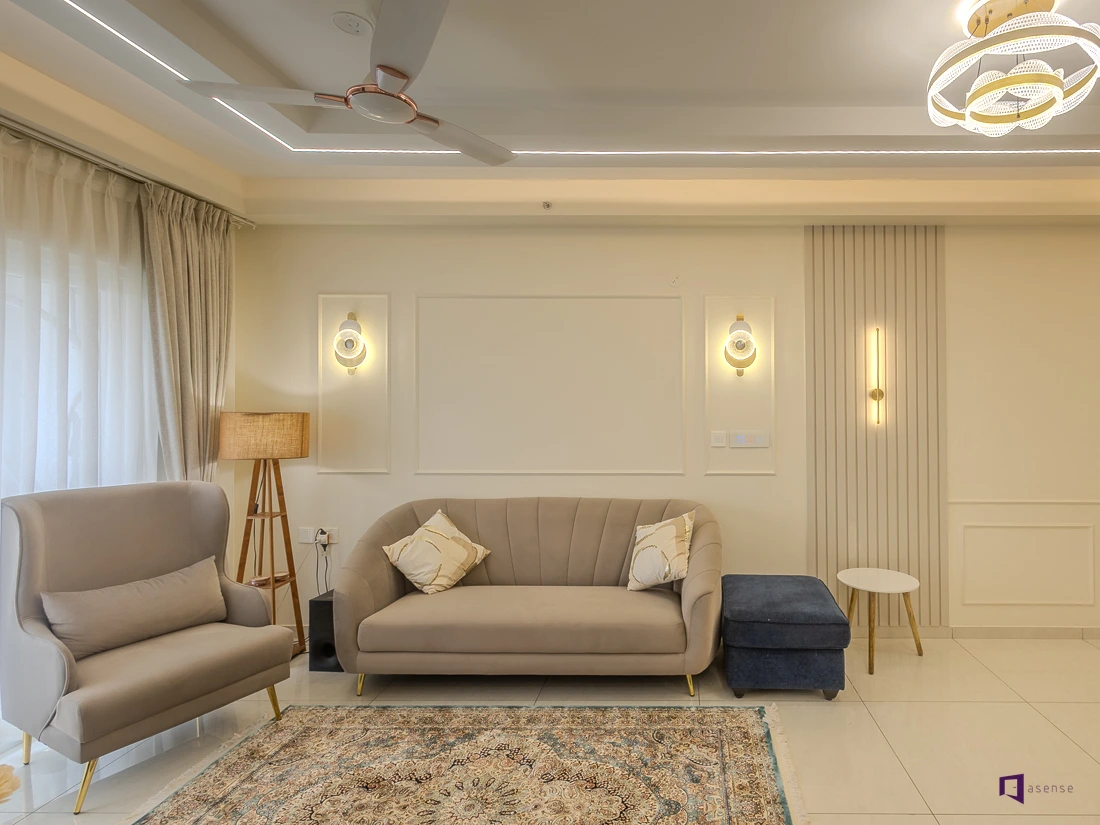
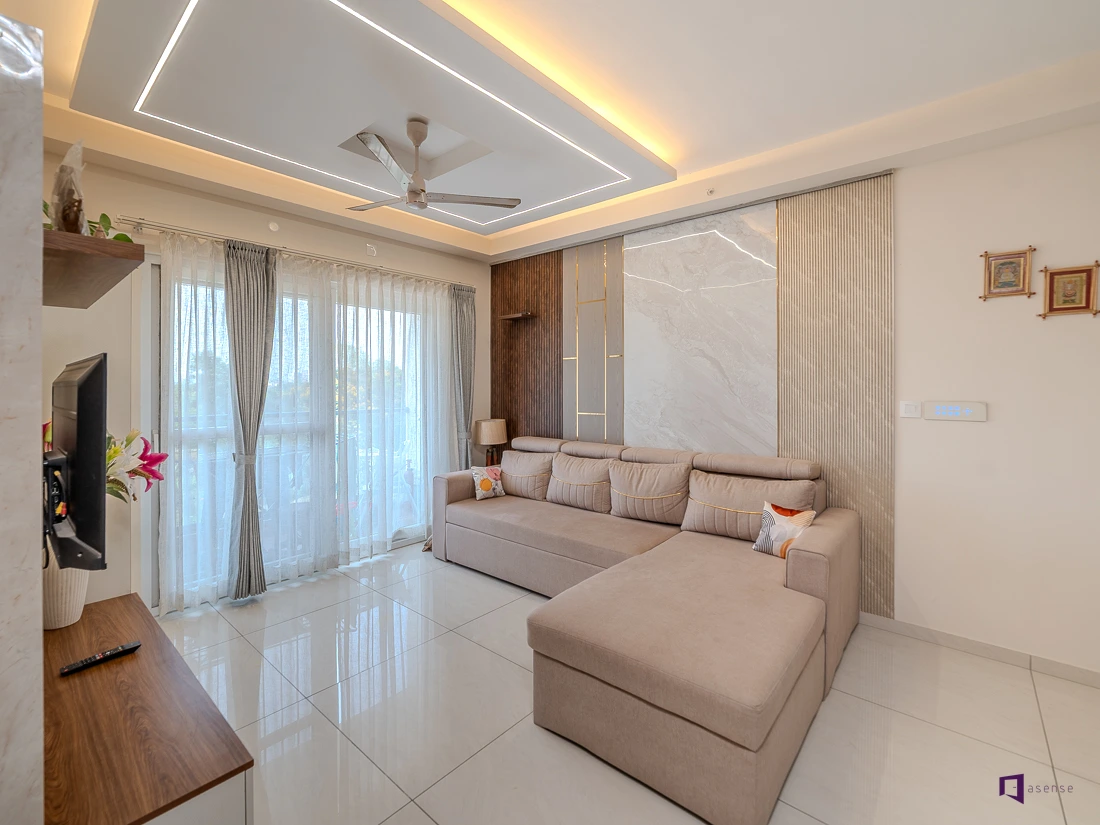
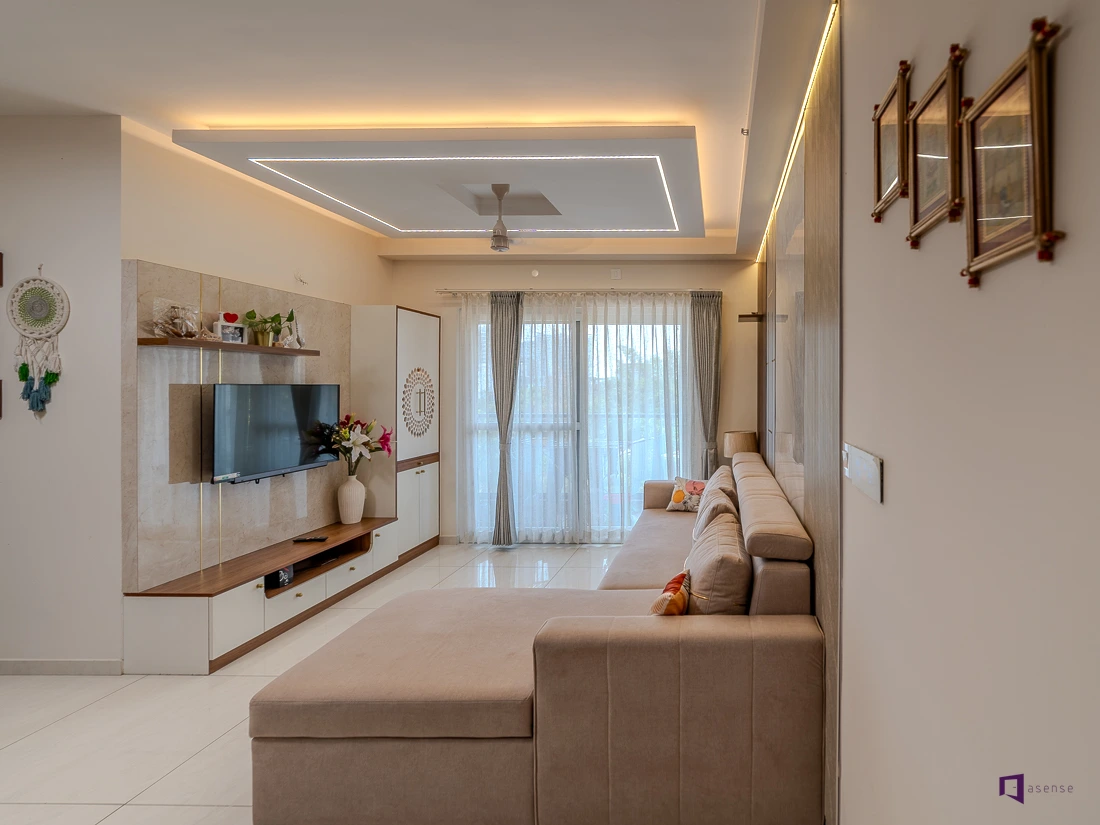
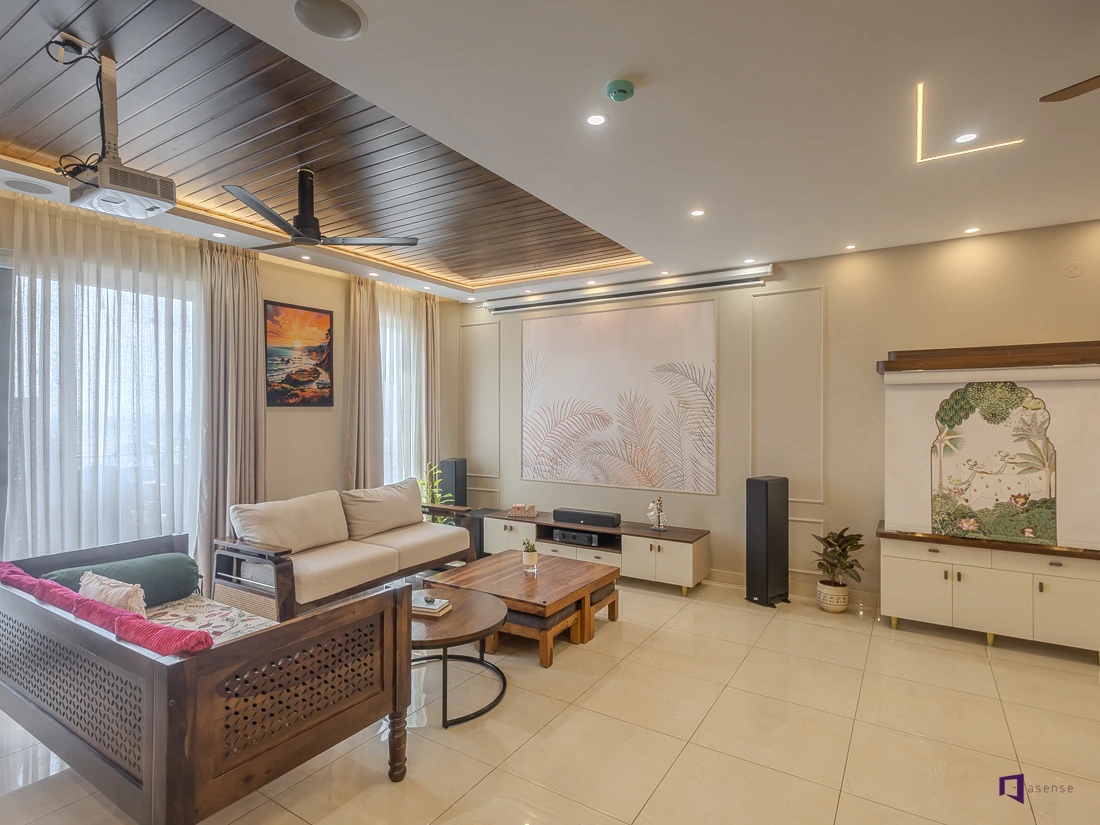
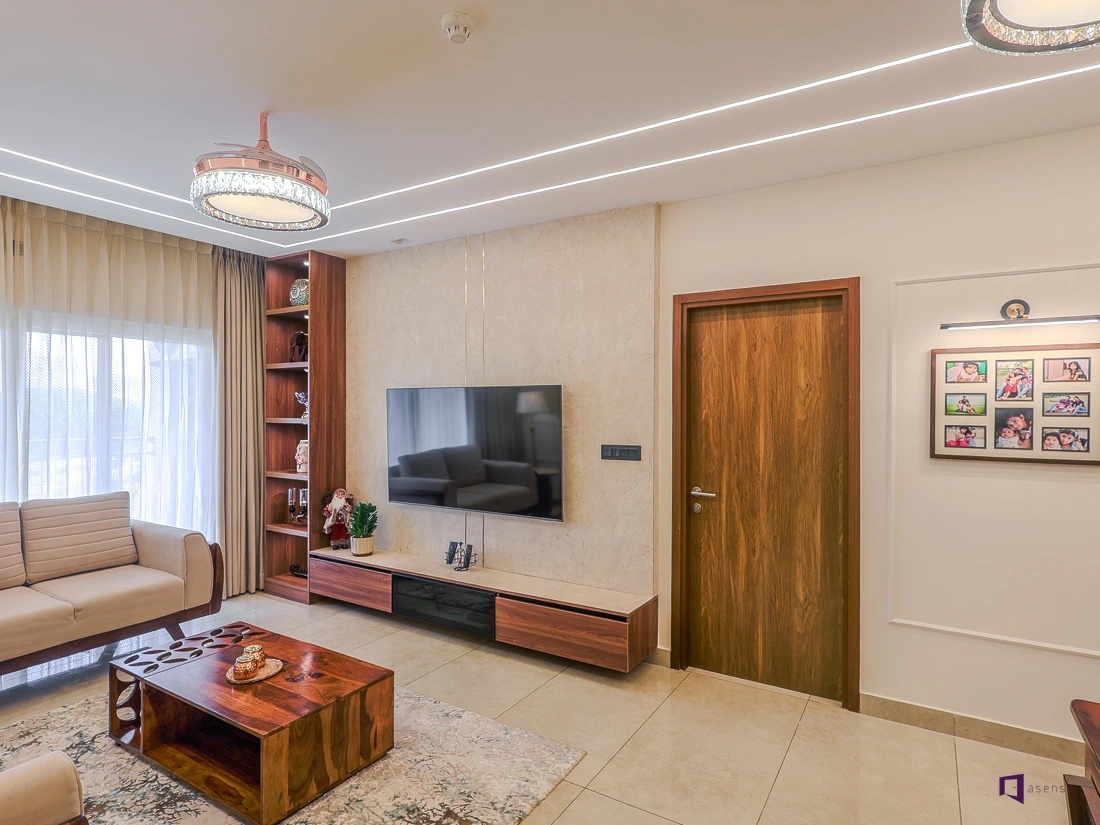
That's the whole point of gypsum. The seamlessness. It's why anything designerly — a cove light, a stepped profile, a curve that dies into a wall — has to be gypsum. PVC just physically can't do that.
It also doesn't burn. Which sounds like a technicality until it isn't.
Where gypsum falls apart is water. It's a plaster. Plaster drinks moisture. Put gypsum in a bathroom and within a monsoon or two you'll see a brown patch spreading from one corner. We've been called to redo enough of these to know it isn't a maybe. It's a when.
The other honest thing: gypsum shows hairline cracks at joints if the installation is lazy or if the building settles. Good work fixes ninety percent of that. Cheap work is the reason gypsum has a bad reputation in some circles.
Rate in Bangalore right now, indicative: ₹65 to ₹120 per sq ft. The lower end is a flat plain ceiling. The upper end is a two-level design with cove lighting, LED profiles, and a proper finish. Saint-Gobain and Gyproc are the two boards we spec by default. There are cheaper Chinese boards floating around. Don't use them.
PVC panels are hollow plastic planks. They clip into a light aluminium grid. No plastering, no jointing, no seven days of dust on your sofa. If your bathroom is 40 sq ft, the whole ceiling can be up in an afternoon.
That's the sell. Speed, waterproofing, and it costs less.
The best use case for PVC is anywhere water might land or steam might sit. Bathrooms obviously. Kitchen soffits. Covered balconies. Utility rooms. Any ground-floor flat where the compound wall is close and termite pressure is real. In those rooms PVC is not a compromise. It's the correct answer.
Where it's the wrong answer is your master bedroom or your living room. Even the best PVC ceiling looks like PVC. You see the plank joints. The finish reads plasticky under warm light. It's fine. It's just not premium.
Two other things worth knowing. PVC is not fire-safe, so we never spec it above a gas hob or near an open flame. And the colour dulls after year six or seven, faster if the panels see afternoon sun through a window.
Bangalore rate right now, indicative: ₹45 to ₹85 per sq ft with grid and installation. Anything cheaper than ₹45 is a thin panel that'll warp or yellow inside three years. We've torn out too many to still recommend them.
The comparison, in a table because you'll scan this anyway
Parameter. Gypsum PVC
Cost in Bangalore (per sq ft). Rs. 65 to Rs. 120 Rs. 45 to Rs. 85
Waterproof No Yes
Fire-safe Yes No
Termite and fungus. Not termite-proof Fully resistant
Maintenance Occasional repaint, joint touch-up Wipe with a damp cloth
Two things about our weather change the answer here.
Monsoon runs June to September, sometimes into October if we're unlucky. Humidity climbs. Bathrooms and balconies with any exposure will feel it. Gypsum in those rooms is a slow disaster.
The bigger issue nobody talks about is seepage from the flat above. In older buildings around Koramangala, Indiranagar, and the older parts of Whitefield, upstairs bathrooms leak into your ceiling. Gypsum absorbs. PVC shrugs. If your building is more than fifteen years old, don't take the risk.
For newer builds on higher floors with sealed AC-run bedrooms and sunlit living rooms, gypsum is genuinely fine. That's the majority of what we do.
Gypsum in the living room, dining, and all the bedrooms. Cove lighting in the living room if the ceiling height allows it (anything under 9 feet, skip the cove or it feels heavy). PVC in every bathroom, the kitchen soffit above the chimney, the utility room, and any balcony that isn't fully enclosed. The foyer takes gypsum, same as the living room, so the two flow together.
The one thing to get right is the transition. Where a gypsum room meets a PVC room, you need a small step, a border, or a light strip. Otherwise the two materials look like two contractors turned up on different days. We usually run a 4-inch dropped gypsum border with a hidden LED where the wet room begins, and it reads as intentional design instead of a joint.
Every ceiling we spec goes through a shop drawing. Our factory quality-checks the board, the grid, and the fasteners before they leave. The site team installs to the drawing, not to memory. If a gypsum joint cracks in year three or a PVC panel warps in year four, our 10-year warranty covers it and we come back to fix it. That's the whole reason to buy from a full-execution firm rather than a floating contractor who won't pick up your calls in year two.
Full process is on how we work. Ballpark cost for your flat sits inside the free interior cost calculator. Or just come by HSR or Whitefield and talk to a designer.
Which is cheaper, gypsum or PVC false ceiling?
PVC, comfortably. In Bangalore right now, PVC works out to ₹45 to ₹85 per sq ft. Gypsum sits at ₹65 to ₹120. Once you add cove lighting or a two-level design to gypsum, the gap gets bigger.
Can I put a PVC ceiling in my bedroom?
Technically yes. In practice we don't recommend it for a master bedroom or any room where the ceiling matters visually. The plank joints and the plasticky finish give it away. Use PVC where you need function, not looks.
How long does a gypsum ceiling actually last?
Structurally, 15 to 20 years. Looks-wise, 10 to 15 if you repaint once and touch up joints when the building settles. Most of the "gypsum failed" stories we hear are actually stories about bad installation.
Is gypsum waterproof at all?
No. Even the moisture-resistant boards are only moisture-resistant, not waterproof. In a bathroom or an open balcony, PVC every time.
What works best in Bangalore's climate?
Gypsum inside, in sealed dry rooms. PVC anywhere monsoon moisture can reach. Lower floors and older buildings should lean more on PVC in wet areas because seepage from above is real.
Can I use both in the same house?
Yes, and it's what we recommend for most 2 and 3 BHK homes here. Gypsum in living, dining, bedrooms. PVC in bathrooms, kitchen soffit, and utility. It's the sensible split.


Choose interiors designed with superior quality material, leaving no room for defects.

Get beautiful interiors for your new home in just 45 days. That’s our delivery guarantee.

Explore design ideas and co-create your dream home with our experienced designers

Complete your design journey and get unwavering support from our dedicated care team.