November 04, 2026
Kitchen Storage Planning for Indian Cooking in Bangalore Flats
Kitchen Storage That Follows How You Cook: Where the Atta, Masalas and Oils Belong
You're in the middle of making a tadka, but the jeera is stored on the other side of the kitchen! The atta is kept in a loft cabinet where you need a stool to access it from. There is also the oil bottle that is kept a couple of cupboards away from the stove. By the time you've gathered everything, the onions are all changed from golden to brown! Nothing is wrong with your kitchen. The only thing that is the issue is the fact that the storage has been done keeping the storage units in mind and not keeping in mind the practical aspects of cooking in the kitchen.
At Asense Interior, one of the best interior designers in Bangalore, we begin kitchen planning by understanding your cooking habits, what you reach for most often and which items you use every day. Here’s how to organise your atta, masalas, oils and other essentials so your kitchen fits naturally into your daily routine.
Plan Your Kitchen Storage by Cooking Zones, Not Cabinets
Most Indian cooking follows the same loop. You prep, cook, serve and clean. Storage works best when each stage has what it needs within arm's reach.
Prep Zone: For chopping, washing vegetables and kneading dough.
Cooking Zone: Around the hob, with everything you need while cooking within easy reach.
Wash zone: the sink, dishes and cleaning supplies.
Storage zone: groceries, dry goods and things you use less often.
The Best Place to Store Your Everyday Masalas
Masalas are used at the hob, so they should live right next to it.
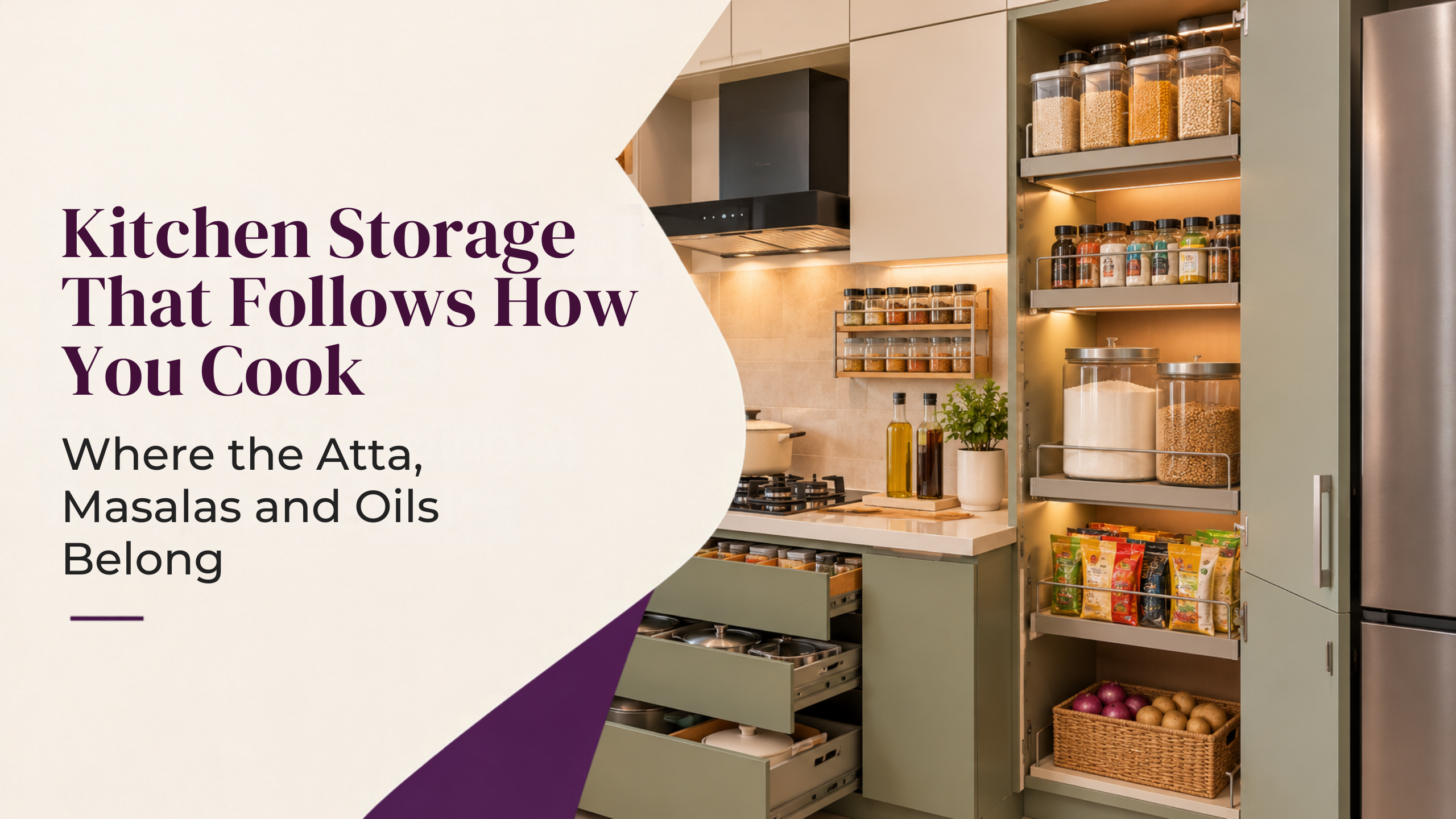
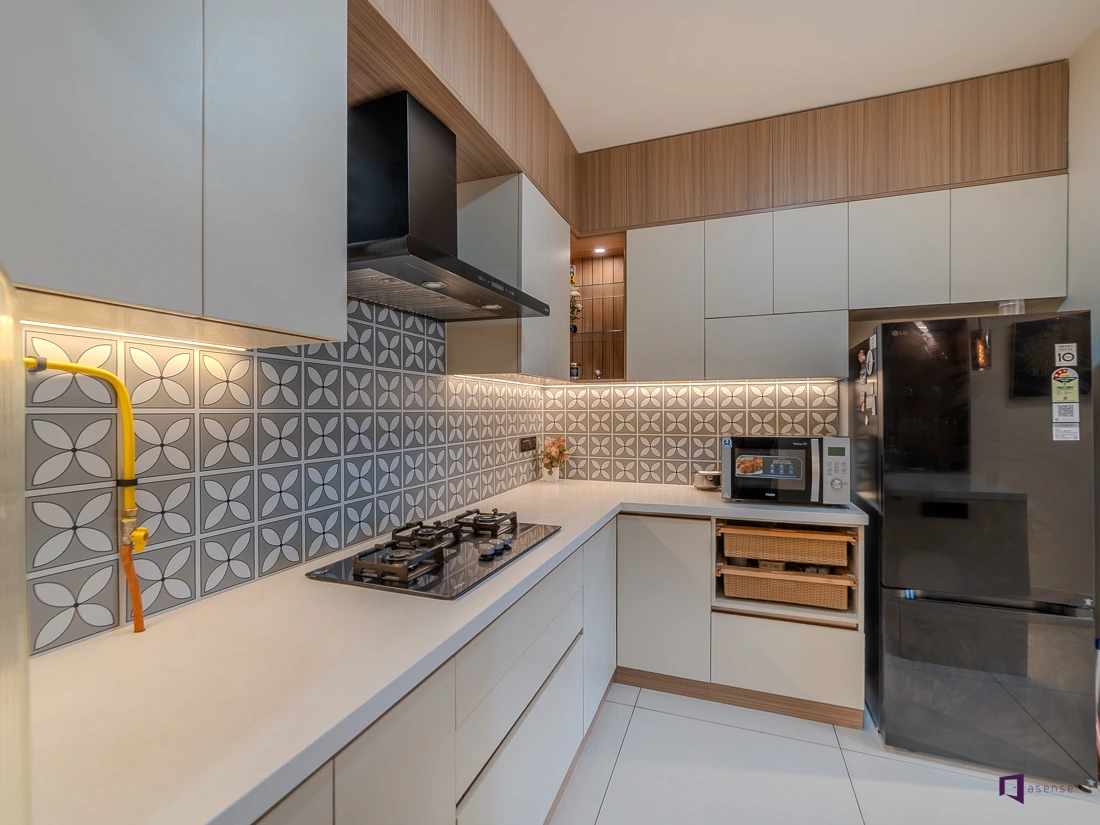
A narrow pull out unit beside the hob keeps everything visible and within reach, and it fits in a very slim gap.
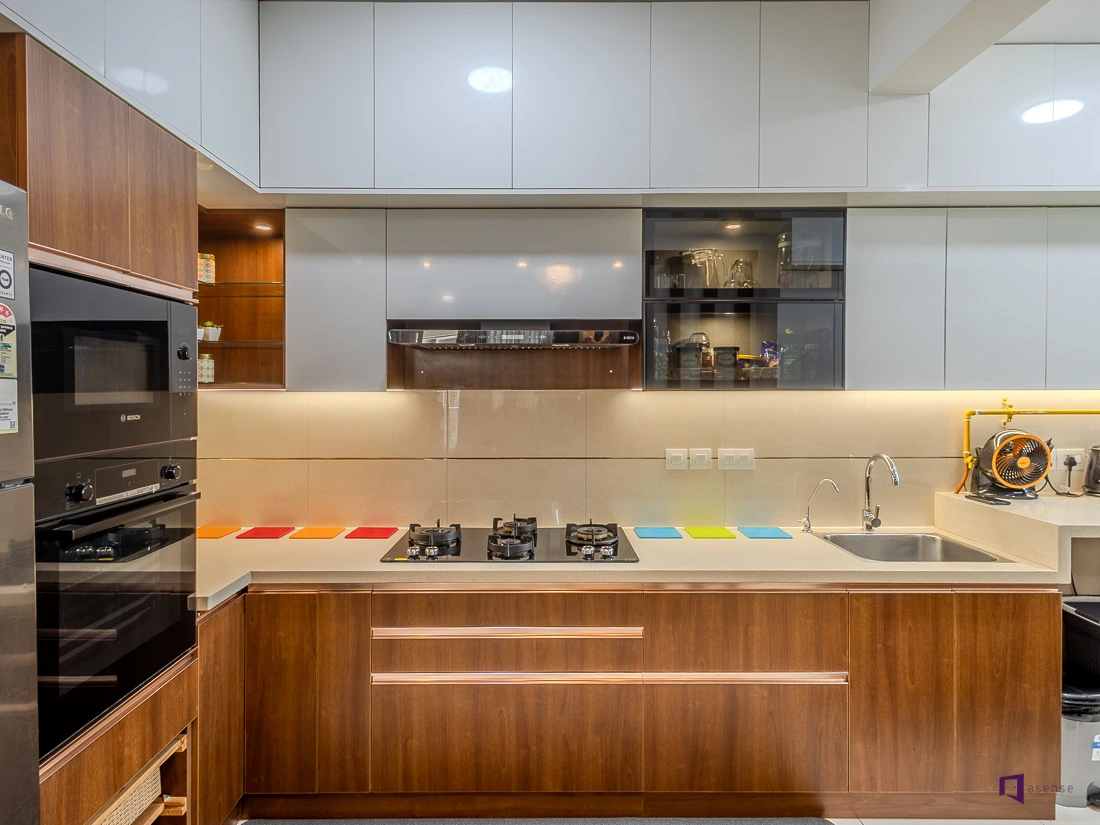
A masala drawer under the hob, with a tray or a few spice containers, also works well.
Keep the daily masalas close, such as salt, haldi, chilli powder and jeera. Store the rarely used ones in a lower shelf or the storage zone.
Use airtight containers or jars, since Bangalore's humid weather can make spices clump.
Keep spices away from direct heat and steam, so avoid a cabinet right above the hob.
Where to Store Cooking Oils and Ghee
Keep daily oil and ghee in a cabinet or pull out unit beside the hob, not directly next to the flame.
Place a small tray under the bottles, so drips do not stain the shelf.
Use a pull out unit with a drawer for bottles and containers, so you can reach them without bending right down.
Keep bulk oil cans and refills in the storage zone, and decant a small amount for daily use.
Where to Store Atta and Everyday Grains
Atta, rice and dals are heavy and used often, so where you keep them matters.
Put the atta container close to the prep zone, where you knead dough. A base cabinet with a pull out shelf or a large drawer works well.
Keep atta, rice and dal at waist height or lower, so you are not lifting heavy containers overhead.
Use airtight containers and keep them off the floor and away from the sink area, where moisture can get in.
A tall pull out pantry unit is useful for bulk groceries and dry goods in a small kitchen.
Label containers if more than one person cooks, so everyone knows what is where.
Where to Store Pots, Pans and Heavy Cookware
Keep the kadhai, tawa and frying pans in a deep drawer under or beside the hob.
Use drawers instead of shelves for heavy cookware, so you can see and reach everything without pulling items out.
Keep pressure cookers and large vessels in a base cabinet near the hob, with lids stored upright or in a rack.
Organising Plates and Cutlery Around the Washing Zone
Put plates and bowls in a drawer or a rack close to the dining area or the sink, depending on your habit.
Keep cutlery in a drawer near the wash zone or the serving area.
Use a dish rack or a pull out basket above or beside the sink.
Keep cleaning supplies in a tray under the sink, away from food items, and check regularly for leaks.
Where to Place Kitchen Appliances and Everyday Essentials
Keep the mixer grinder, toaster and other daily appliances on or near the counter, close to a socket.
Store appliances you use less often in a tall unit or an upper cabinet.
Put a dustbin or a pull out waste unit near the prep zone, so peels and scraps go in without a trip across the kitchen.
A Simple Rule for Planning Storage Heights
Between waist and shoulder height: daily items, such as masalas, oils and plates.
Below the waist: heavy things like atta, large pots and bulk groceries.
Above shoulder height: things you rarely use, like festive serveware and extra containers.
Mistakes to skip
Putting masalas in a cabinet across the kitchen from the hob.
Storing heavy atta or rice containers in a high loft.
Placing oil bottles right beside the flame.
Using shelves for everything, when drawers and pull outs make items easier to see and reach.
Leaving corner cabinets as a black hole. Add a corner pull out or a carousel unit.
Planning the layout without thinking about your own habits.
Conclusion
The best kitchen storage is the kind that follows your routine. Put masalas and oils at the hob, atta near the prep counter, heavy cookware in deep drawers, and everything you use every day between waist and shoulder height. A few well planned pull outs do more for your kitchen than extra cabinets.
If you would like your kitchen planned around the way you cook, the best home interior designers in Bangalore will walk through your routine before they draw a single cabinet. Whether you choose a full service best interior design company in Bangalore or one of the best budget interior designers in Bangalore for a kitchen only job, tell them what you cook most, who cooks and how many people share the kitchen, and ask to see the storage plan in 3D.